

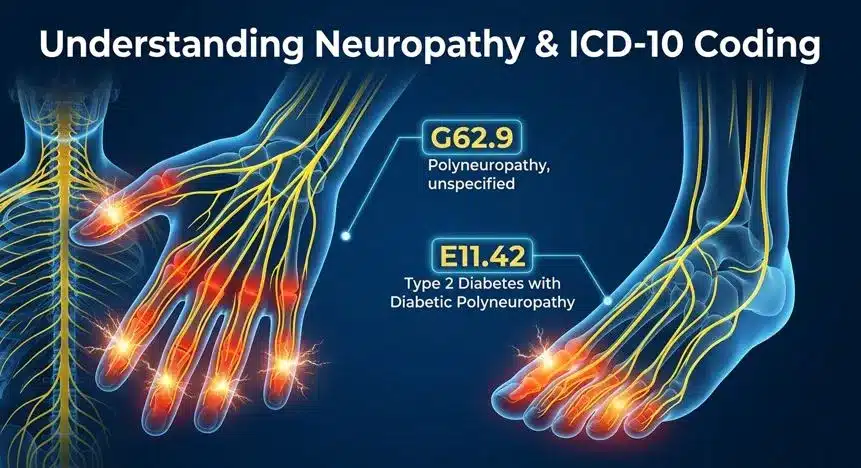
Neuropathy is one of the most commonly diagnosed neurological complications in clinical practice. Accurate diagnosis coding is essential for proper reimbursement, medical documentation, and compliance with payer requirements. Understanding the ICD 10 code for neuropathy helps healthcare providers, coders, and billing professionals ensure accurate claim submission and reduce denials.
This comprehensive guide explains the most frequently used ICD-10 codes for neuropathy, including peripheral neuropathy, diabetic neuropathy, neuropathy unspecified, and diabetes mellitus with peripheral neuropathy.
What Is Neuropathy?
Neuropathy refers to nerve damage that affects sensation, movement, or organ function. The condition may occur due to diabetes, infections, autoimmune disorders, trauma, medications, or unknown causes. Patients with neuropathy often experience:
- Numbness
- Tingling sensations
- Burning pain
- Muscle weakness
- Loss of coordination
- Sensory deficits
The severity and underlying cause determine the appropriate ICD-10-CM code assignment.
ICD 10 Code for Neuropathy
The general ICD 10 code for neuropathy depends on the specific type and cause of nerve damage.
Common Neuropathy ICD-10 Codes
| Condition | ICD-10 Code |
| Polyneuropathy, unspecified | G62.9 |
| Hereditary and idiopathic neuropathy, unspecified | G60.9 |
| Peripheral neuropathy, unspecified | G62.9 |
| Diabetic neuropathy | Depends on diabetes type |
| Autonomic neuropathy | G90.9 |
The most frequently used code for unspecified neuropathy is G62.9 – Polyneuropathy, unspecified.
ICD-10 Code for Peripheral Neuropathy
The ICD 10 code for peripheral neuropathy is generally:
G62.9 – Polyneuropathy, Unspecified
This code applies when documentation confirms peripheral neuropathy but does not specify the underlying cause or exact type.
Peripheral neuropathy affects nerves outside the brain and spinal cord. Symptoms often begin in the hands and feet and may gradually worsen over time.
Clinical signs include:
- Burning pain in extremities
- Tingling or “pins and needles”
- Decreased sensation
- Muscle weakness
- Balance difficulties
When the cause is known, coders should assign a more specific diagnosis code rather than using unspecified neuropathy codes.
ICD-10 Code for Peripheral Neuropathy and Documentation Requirements
Accurate documentation is critical for coding compliance. Providers should document:
- Type of neuropathy
- Underlying cause
- Severity
- Associated diabetes status
- Laterality if applicable
- Complications
Insufficient documentation often results in claim denials and delayed reimbursements.
Medical coders should review physician notes carefully to determine whether neuropathy is diabetic, toxic, hereditary, or idiopathic.
ICD 10 Code for Diabetic Neuropathy
Diabetic neuropathy is one of the most common complications of diabetes mellitus. The ICD-10 code varies depending on the diabetes type and manifestation.
ICD 10 Code for Diabetic Neuropathy
For diabetes with neuropathy:
E11.40 – Type 2 Diabetes Mellitus with Diabetic Neuropathy, Unspecified
This code is used when documentation confirms diabetic neuropathy without specifying peripheral neuropathy or polyneuropathy.
If the neuropathy type is specified, more detailed codes should be assigned.
Examples include:
| Condition | ICD-10 Code |
| Type 2 diabetes with diabetic neuropathy, unspecified | E11.40 |
| Type 2 diabetes with diabetic polyneuropathy | E11.42 |
| Type 1 diabetes with diabetic neuropathy | E10.40 |
| Type 1 diabetes with diabetic polyneuropathy | E10.42 |
Proper code selection depends entirely on provider documentation.
ICD 10 Code for Diabetes with Peripheral Neuropathy
One of the most frequently searched diagnosis codes is the ICD 10 code for diabetes with peripheral neuropathy.
The correct code is generally:
E11.42 – Type 2 Diabetes Mellitus with Diabetic Polyneuropathy
This code is assigned when a provider documents that diabetes has caused peripheral neuropathy.
Because ICD-10 assumes a causal relationship between diabetes and neuropathy when documented together, coders typically report diabetic neuropathy codes unless the physician states otherwise.
Conditions coded under E11.42 may include:
- Diabetic peripheral neuropathy
- Diabetic polyneuropathy
- Peripheral nerve damage due to diabetes
ICD 10 Code for Neuropathy in Diabetes
The ICD 10 code for neuropathy in diabetes varies according to diabetes type:
Type 1 Diabetes
- E10.40 – Type 1 diabetes mellitus with diabetic neuropathy, unspecified
- E10.42 – Type 1 diabetes mellitus with diabetic polyneuropathy
Type 2 Diabetes
- E11.40 – Type 2 diabetes mellitus with diabetic neuropathy, unspecified
- E11.42 – Type 2 diabetes mellitus with diabetic polyneuropathy
Other Specified Diabetes
- E13.40 – Other specified diabetes mellitus with diabetic neuropathy
- E13.42 – Other specified diabetes mellitus with diabetic polyneuropathy
Selecting the correct diabetes category is essential for coding accuracy and payer compliance.
ICD 10 Code for Diabetes Mellitus with Peripheral Neuropathy
The ICD 10 code for diabetes mellitus with peripheral neuropathy most commonly reported in medical billing is:
E11.42 – Type 2 Diabetes Mellitus with Diabetic Polyneuropathy
This diagnosis indicates that diabetes directly caused peripheral nerve damage.
Healthcare providers should clearly document:
- Diabetes type
- Neuropathy type
- Relationship between diabetes and neuropathy
- Treatment plan
- Severity of symptoms
Detailed documentation supports medical necessity and improves reimbursement outcomes.
ICD 10 Code for DM with Neuropathy
The abbreviation DM refers to Diabetes Mellitus.
The ICD 10 code for DM with neuropathy depends on diabetes classification:
| Diabetes Type | ICD-10 Code |
| Type 1 DM with neuropathy | E10.40 |
| Type 1 DM with polyneuropathy | E10.42 |
| Type 2 DM with neuropathy | E11.40 |
| Type 2 DM with polyneuropathy | E11.42 |
Medical coders must verify physician documentation before assigning these codes.
ICD 10 Code for Neuropathy Unspecified
When documentation lacks specificity regarding the type or cause of neuropathy, the appropriate code is:
G62.9 – Polyneuropathy, Unspecified
The ICD 10 code for neuropathy unspecified should only be used when no additional details are available.
Excessive use of unspecified codes may lead to:
- Reduced reimbursement
- Increased audits
- Medical necessity concerns
- Higher denial rates
Providers should strive to document the precise neuropathy diagnosis whenever possible.
Common Causes of Neuropathy
Neuropathy can result from various medical conditions, including:
- Diabetes mellitus
- Alcohol abuse
- Vitamin deficiencies
- Kidney disease
- Autoimmune disorders
- Infections
- Chemotherapy
- Toxin exposure
- Hereditary disorders
Identifying the underlying cause allows coders to assign the most accurate ICD-10 code.
Medical Billing Tips for Neuropathy Coding
Accurate neuropathy coding requires careful review of clinical documentation.
Best practices include:
Verify Diabetes Linkage
ICD-10 generally presumes a relationship between diabetes and neuropathy when both are documented unless stated otherwise.
Use Specific Codes
Always select the highest level of specificity available.
Review Provider Notes
Confirm the exact neuropathy type before code assignment.
Support Medical Necessity
Include supporting documentation for diagnostic testing and treatment.
Reduce Claim Denials
Accurate coding improves clean claim rates and reimbursement efficiency.
Frequently Asked Questions
What is the ICD 10 code for neuropathy?
The most common code is G62.9 – Polyneuropathy, unspecified, depending on the underlying cause.
What is the ICD 10 code for peripheral neuropathy?
The commonly reported code is G62.9, unless a more specific diagnosis is documented.
What is the ICD 10 code for diabetic neuropathy?
For Type 2 diabetes with neuropathy, the code is E11.40.
What is the ICD 10 code for diabetes with peripheral neuropathy?
The appropriate code is E11.42 – Type 2 diabetes mellitus with diabetic polyneuropathy.
What is the ICD 10 code for neuropathy unspecified?
The correct diagnosis code is G62.9 – Polyneuropathy, unspecified.
Conclusion
Accurate assignment of the ICD 10 code for neuropathy is essential for effective medical billing, compliance, and reimbursement. Whether coding peripheral neuropathy, diabetic neuropathy, diabetes mellitus with peripheral neuropathy, or neuropathy unspecified, selecting the most specific ICD-10 code ensures proper documentation and cleaner claims. Healthcare providers and medical coders should maintain detailed clinical records to support coding accuracy, reduce denials, and optimize revenue cycle performance.