
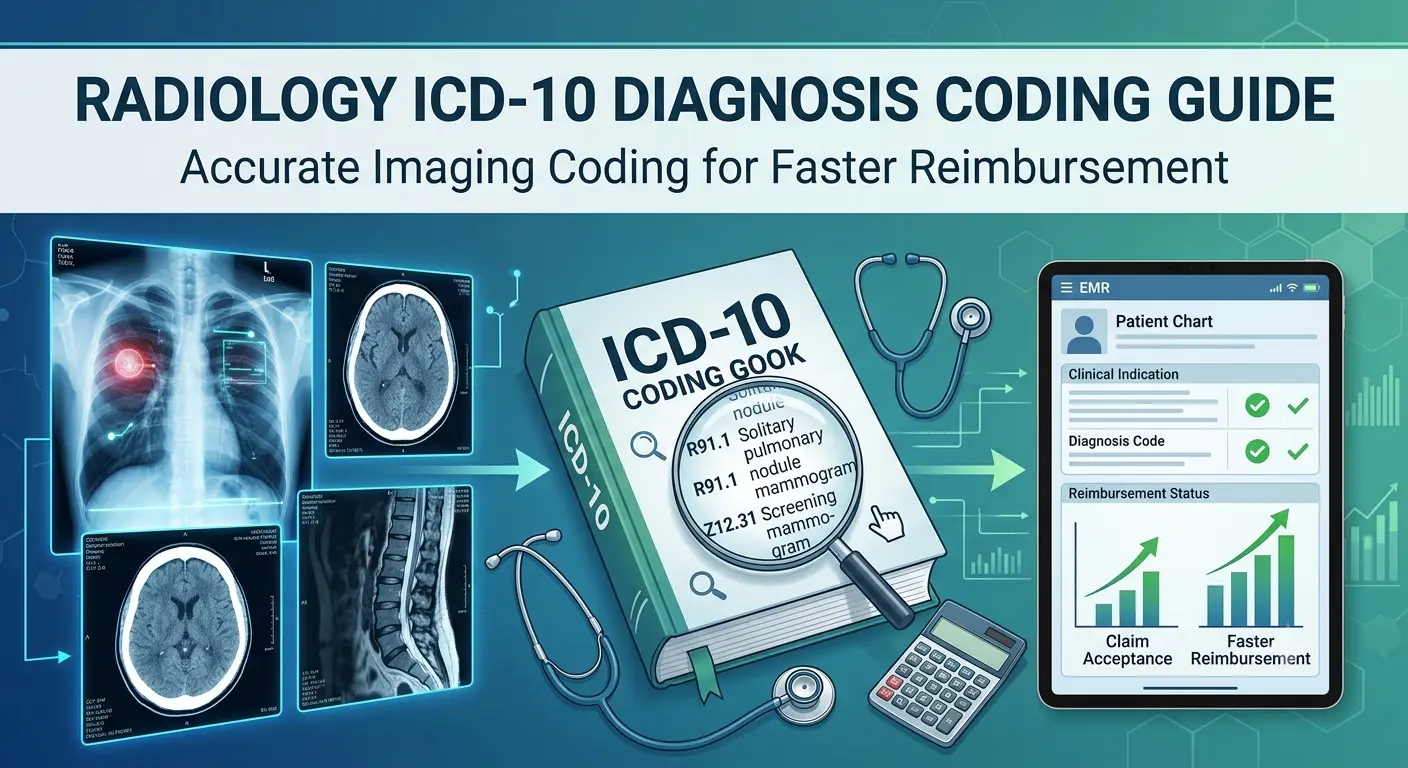
Radiology ICD-10 coding is different from coding in most medical specialties because the diagnosis code explains why an imaging study was medically necessary, not which procedure was performed. While CPT codes identify the X-ray, CT, MRI, ultrasound, or nuclear medicine service, the ICD-10-CM code justifies the examination and supports reimbursement.
Accurate diagnosis coding improves claim acceptance, reduces denials, and ensures compliance with payer requirements. Whether coding for outpatient imaging centers, hospitals, or physician practices, selecting the correct ICD-10 code is essential for successful radiology billing.
Understanding ICD-10 Coding in Radiology
Every radiology claim requires two key components:
- CPT code – identifies the imaging procedure performed.
- ICD-10-CM code – explains the patient’s medical condition, symptom, or screening reason.
Insurance companies evaluate medical necessity by reviewing the diagnosis code. Even when the correct imaging procedure is billed, an inaccurate or nonspecific ICD-10 code may result in claim rejection.
Selecting the Correct Diagnosis Code
The diagnosis should always reflect the clinical reason documented by the ordering provider.
When the radiologist confirms a disease after interpreting the study, report the confirmed diagnosis rather than the patient’s presenting symptom.
For example:
- CT confirms appendicitis → Report the appendicitis diagnosis.
- MRI confirms lumbar disc herniation → Report the disc disorder code.
- Ultrasound confirms gallstones → Report the cholelithiasis diagnosis.
If the examination does not establish a definitive diagnosis, assign the documented sign, symptom, or abnormal finding instead.
Coding Abnormal Imaging Findings
Radiology frequently identifies abnormalities before a physician confirms the underlying disease. ICD-10-CM includes the R90–R94 category specifically for abnormal imaging findings.
Common examples include:
| ICD-10 Category | Description |
|---|---|
| R90 | Abnormal CNS imaging findings |
| R91 | Abnormal lung imaging findings |
| R92 | Abnormal breast imaging findings |
| R93 | Abnormal findings in other organs |
| R94 | Abnormal functional imaging studies |
One of the most frequently reported codes is R91.1 – Solitary pulmonary nodule, commonly assigned after chest CT imaging when cancer has not yet been confirmed.
These codes should only be used when documentation supports an abnormal imaging result without a definitive diagnosis.
Screening Imaging Examinations
Preventive imaging follows different coding rules.
For screening studies, report the appropriate screening Z code as the primary diagnosis.
Examples include:
- Z12.31 – Screening mammogram
- Z12.11 – Screening for colorectal cancer
- Z13.6 – Cardiovascular screening
If screening identifies an abnormality, assign the finding as an additional diagnosis when supported by documentation.
Diagnostic imaging performed because of symptoms should never be coded as a screening examination.
Common Symptom Codes Used in Radiology
Many outpatient imaging studies are ordered before a diagnosis is established. In these situations, symptom codes appropriately demonstrate medical necessity.
Frequently used examples include:
- R07.9 – Chest pain
- R10.9 – Abdominal pain
- R51.9 – Headache
- M54.50 – Low back pain
- M25.569 – Knee pain
- R42 – Dizziness
Selecting the most specific symptom code available improves claim accuracy and decreases payer denials.
Documentation Requirements for Accurate Coding
Successful radiology coding begins with complete physician documentation.
Every imaging order should clearly include:
- Clinical indication
- Signs or symptoms
- Working diagnosis (if known)
- Body region
- Laterality when applicable
The final radiology report should document confirmed findings, anatomical location, severity, and any clinically significant abnormalities.
Incomplete documentation often delays coding, increases physician queries, and contributes to reimbursement delays.
Common Radiology Coding Errors
Several coding mistakes consistently lead to denied claims.
Coding suspected conditions as confirmed
Outpatient radiology coding does not allow reporting probable, suspected, or rule-out diagnoses as established diseases.
Using unspecified diagnosis codes
Whenever documentation supports greater specificity, avoid unspecified ICD-10 codes.
Incorrect screening diagnosis
Diagnostic imaging ordered because of symptoms should not be reported using preventive screening codes.
Missing laterality
Many musculoskeletal, breast, and extremity diagnoses require right, left, or bilateral designation.
Coding insignificant incidental findings
Only clinically significant incidental findings documented by the interpreting physician should be reported.
Medical Necessity and Insurance Coverage
Insurance carriers evaluate every imaging claim based on medical necessity.
Medicare uses:
- National Coverage Determinations (NCDs)
- Local Coverage Determinations (LCDs)
Commercial insurers maintain their own medical policies that link specific ICD-10 diagnosis codes with covered imaging services.
Coders should verify that the selected diagnosis supports the ordered examination before claim submission to minimize denials.
Best Practices for Radiology ICD-10 Coding
Consistently following proven coding practices improves reimbursement while maintaining compliance.
We recommend:
- Review the complete imaging order before assigning codes.
- Code confirmed diagnoses whenever available.
- Use symptom codes only when no definitive diagnosis exists.
- Assign abnormal imaging finding codes appropriately.
- Apply screening Z codes only for preventive examinations.
- Capture laterality and anatomical specificity.
- Validate diagnosis codes against payer coverage policies.
- Perform routine documentation audits to identify coding trends.
Conclusion
Accurate Radiology ICD-10 coding depends on selecting diagnosis codes that clearly support the medical necessity of every imaging study. Understanding the distinction between confirmed diagnoses, symptoms, abnormal findings, and screening encounters helps reduce denials while improving coding compliance. By combining thorough documentation with precise ICD-10 code selection, radiology providers can strengthen reimbursement, streamline claim processing, and maintain high coding accuracy across all imaging modalities.