

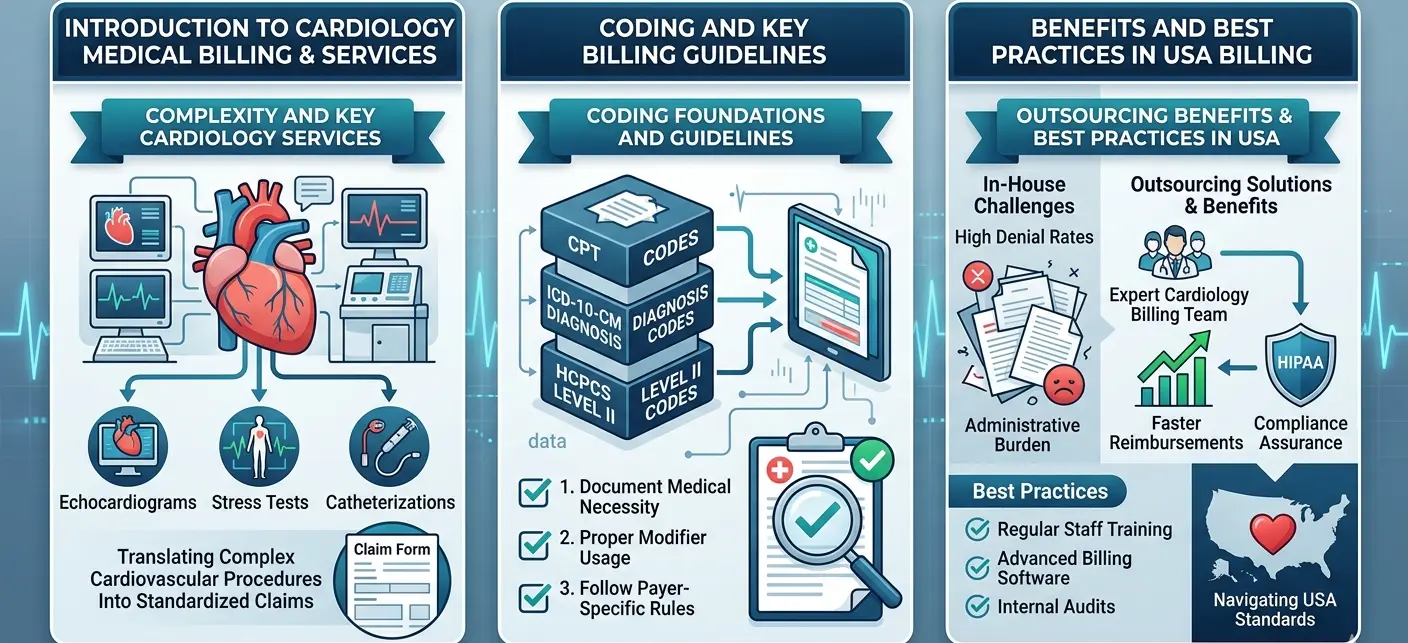
Cardiology services involve complex treatments, sophisticated diagnostic tests, and expensive therapies. This makes medical billing in cardiology a highly specialized field to ensure timely and accurate claims, while avoiding potential pitfalls. If you’re a solo practitioner or manage a multispecialty cardiology clinic, you need to be familiar with the intricacies of medical billing cardiology.
What is Cardiology Medical Billing?
Cardiology medical billing (or coding) involves converting services to universal codes for reimbursement. Cardiology uses CPT, ICD-10 and HCPCS codes to indicate cardiovascular procedures like echocardiograms, stress tests, catheterizations and others.
Cardiovascular medical billing and coding is complex because of the complexity involved in cardiovascular procedures. Any mistakes can lead to denial or rejection of claims.
Importance of Cardiovascular Billing
Cardiovascular billing is important because cardio procedures are costly, complex and highly regulated. Accurate billing ensures:
- Optimal payment for services delivered
- Minimized claim rejections and denials
- Adherence to healthcare laws and regulations
- Enhanced revenue for practices
These considerations have led to many practices outsourcing cardiology billing company revenue cycle management.tices rely on specialized cardiology billing company solutions to handle their revenue cycle efficiently.
Key Components of Cardiology Billing and Coding
Effective cardiology billing and coding involves several steps:
- Registration & Insurance Check
Accurately registering the patient and confirming insurance eligibility prior to treatment and services. - Medical Coding
Proper codes for diagnoses and procedures. This is the core of the cardiology medical billing. - Charge Entry
Inputting coded information into the system. - Claim Submission
Submitting claims for payment to insurance providers. - Payment Posting & Denial Management
Posting payments and reconciling denials and rejections. - Reporting & Analysis
Measures and optimisation of the revenue cycle.
Cardiology Billing Guidelines You Must Follow
It’s important to follow cardiology billing guidelines to prevent compliance problems. Some key guidelines include:
- Always check for medical necessity of procedures
- Adhere to CPT and ICD-10 codes
- Adhere to individual payer rules for procedures
- Use appropriate modifiers
- Keep patient records up-to-date
Challenges in Cardiology Medical Billing
Though critical, medical billing cardiology also presents some challenges:
- Regular coding and terminology changes
- Complicated procedures that require precise documentation
- Highest denial rate because of inaccurate or insufficient information
- Healthcare industry compliance standards
Many practices choose to outsource cardiology medical billing to address these issues.
Why Outsource Cardiology Billing
Hiring a cardiology medical billing company can save time and boost revenue. Here are the key benefits:
- Specialized Expertise: Eligible for a team of experts in cardiology medical billing and coding
- Increased Accuracy: Minimal denials and rejections due to inaccurate coding
- Quick Payments: Timely claim processing and follow up
- Improves Efficiency: Reduces patients’ turnaround times
- Risk Mitigation: Helps in adhering to industry standards
Cardiology Medical Billing in the USA
Cardiology medical billing USA procedures are rigorous, given the regulations like HIPAA and the policies of the payers. Practices must ensure:
- Adherence to federal and state laws
- Use of updated coding systems
- Documentation procedures for audits
- Proper data reporting and security
Due to the complexities, many US healthcare practitioners employ the expertise of cardiology medical billing services to ensure compliance and maximize revenue.e revenue.
Best Practices for Efficient Cardiology Billing
For successful cardiovascular billing, consider these tips:
- Keep staff up-to-date with coding changes
- Automate billing with software
- Audit your claims for errors
- Keep track of key performance indicators (KPIs)
- Work with a specialist cardiology billing company
Conclusion
In the ever-evolving healthcare landscape, cardiology medical billing is crucial for the success of cardiovascular practices. Everything from precise cardiology billing and coding to adherence to robust cardiology billing guidelines affects revenues and profitability.
By fusing expert cardiology medical billing, especially in the cardiology medical billing USA industry, practices can efficiently navigate processes, decrease denials and boost revenue. Whether internal or external, robust billing is a key to prosperous cardiovascular practice.