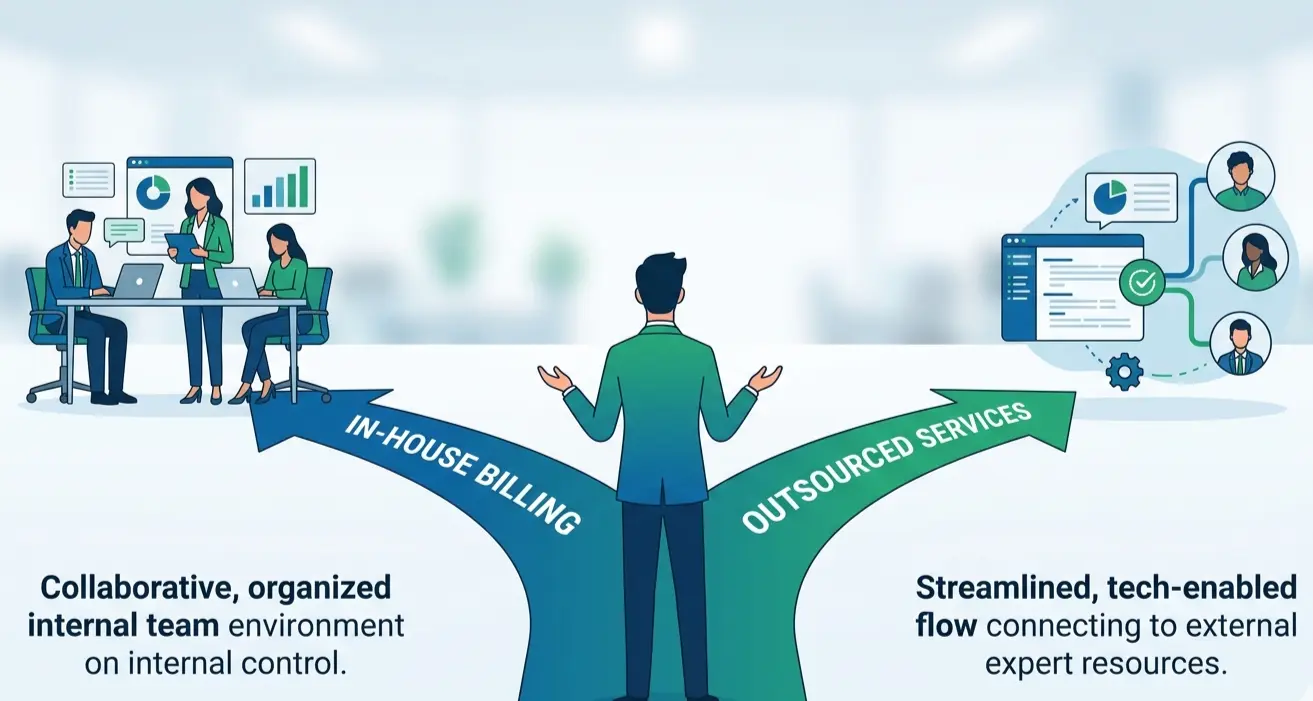
Medical billing is really important for any healthcare practice. For people who manage offices one of the decisions they have to make is whether to use in-house billing teams or outsourced medical billing services. Each way of doing things has its good and bad points and the right choice depends on the size of your practice what you want to achieve and what resources you have.
This guide will help you understand both options. Make a decision that will help your practice be financially stable and work efficiently.
Understanding In-House Medical Billing
In-house billing means hiring a team of people who work just for your practice to take care of all the medical billing. This includes things like coding sending in claims posting payments and dealing with denials.
Advantages of In-House Billing
One of the things about in-house billing is that you have control over it. The person in charge of the office can watch over the billing process check how the staff is doing and fix any mistakes or problems away. It is also easier to talk to the billing staff because they work in the office and know how the practice works and who the patients are.
Another good thing about in-house billing is that you can make it fit your practices needs. Your in-house team can make the billing process work for your practice, which can be really helpful for specialty clinics that have special billing needs.
Challenges of In-House Billing
with the good things about in-house billing it can be expensive to have a team of people just for billing. You have to pay their salaries train them buy software and keep up with changes in the law. It can also be hard to keep the staff up-to-date with all the changes in regulations and coding.
When experienced billers leave their jobs it can cause problems with getting paid and making mistakes on claims until you can train people.
What Are Outsourced Medical Billing Services?
Outsourced medical billing services are when you work with a company that takes care of your billing from outside your practice. These companies are experts in managing the money side of healthcare and use tools and experienced people to take care of claims.
Advantages of Outsourcing
One of the things about outsourcing is that it can save you money. Of paying full-time salaries and buying equipment you usually pay a percentage of what you collect or a fixed fee. This can really lower your costs.
Outsourcing also gives you access to experts and the latest technology. Billing companies stay up-to-date on all the changes in coding what payers need and the laws, which reduces mistakes and makes it more likely that claims will be accepted.
Another big advantage of outsourcing is that it can grow with your practice. As your practice gets bigger the outsourcing company can easily add services without you having to hire more staff.
Finally outsourcing can get you paid faster. Since the billing company is just focused on billing they can process claims quickly which improves your cash flow.
Challenges of Outsourcing
However outsourcing is not perfect. One common problem is that you have control over the billing process. Since the billing is done outside your office you might feel less involved in the day-to-day work.
It can also be hard to talk to the billing company if they’re not responsive or do not tell you what is going on. You need to choose a company that’s reputable and has a clear way of reporting what they are doing.
Key Differences: In-House vs. Outsourced Billing
1. Cost Structure
In-house billing requires fixed costs such as salaries, benefits, and software investments. In contrast, outsourced medical billing services offer flexible pricing models, often based on collections, making budgeting more predictable.
2. Expertise and Compliance
Outsourced providers typically employ specialists who are trained in the latest coding systems and compliance standards. In-house teams may struggle to keep up without continuous training.
3. Control and Oversight
In-house billing offers direct control, while outsourcing requires trust in a third-party provider. However, many outsourcing companies now provide detailed dashboards and reports to maintain transparency.
4. Scalability
Outsourcing allows practices to scale quickly without hiring additional staff. In-house teams may require significant time and resources to expand.
5. Technology Access
Outsourced medical billing services often use advanced software and analytics tools, which may be expensive for smaller practices to implement internally.
How Office Managers Can Decide
Choosing between in-house billing and outsourcing is not a one-size-fits-all decision. Office managers should evaluate the following factors:
Practice Size and Volume
Smaller practices may benefit more from outsourcing due to limited resources, while larger organizations might justify an in-house team.
Budget Constraints
If reducing overhead is a priority, outsourcing can offer significant savings.
Complexity of Services
Specialty practices with complex billing requirements may prefer in-house teams for greater customization or partner with specialized outsourcing firms.
Current Billing Performance
If your practice is experiencing frequent claim denials, delayed reimbursements, or compliance issues, outsourcing may provide immediate improvements.
Long-Term Growth Goals
For practices planning to expand, outsourced medical billing services offer flexibility and scalability without the burden of hiring and training new staff.
Best Practices for Transitioning to Outsourced Billing
If you decide to switch to outsourced medical billing services, a smooth transition is crucial:
- Choose a reputable vendor with proven experience in your specialty
- Ensure data security and compliance with HIPAA regulations
- Set clear communication protocols for regular updates and reporting
- Monitor performance metrics such as claim acceptance rates and turnaround times
Conclusion
For office managers, the decision between in-house billing and outsourced medical billing services can significantly impact a practice’s financial health. While in-house teams offer control and customization, outsourcing provides cost savings, expertise, and scalability.
Ultimately, the right choice depends on your practice’s unique needs and goals. By carefully evaluating your current challenges and future plans, you can select a billing solution that enhances efficiency, reduces errors, and maximizes revenue.
A strategic approach to billing is not just about managing claims—it’s about ensuring the long-term success of your healthcare practice.