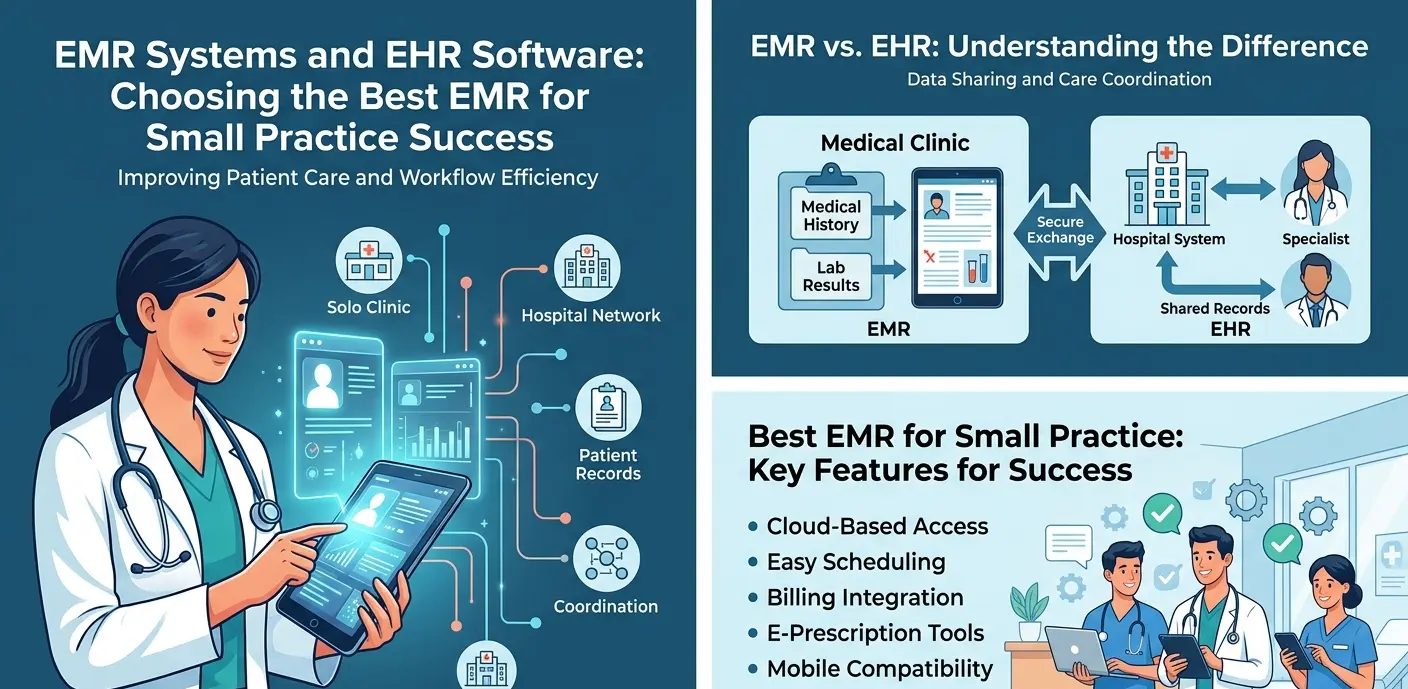
In today’s world, healthcare organizations make great use of modern technology to handle patient data, streamline operations, and provide quality healthcare. This is the reason why clinics, hospitals as well as private practices now use EMR systems and EHR software. From a solo practice to a flourishing healthcare organization, the right choice of EMR software can streamline healthcare operations, cut down on paperwork, and enhance patient satisfaction.
We will discuss the significance of EMR systems, the advantages of EHR software, and share you an EMR systems list to help your healthcare provider pick with which one is best suited to the requirements.
What Are EMR Systems?
EMR systems, or Electronic Medical Record systems as it is known, are digital platforms which are used by healthcare providers to store and manage the patients medical records digitally. They are system alternatives to paper systems and enable doctors, nurses and administrative staff to retrieve patient details easily, quickly and securely.
An EMR typically contains:
- Patient medical history
- Diagnoses
- Medications
- Treatment plans
- Lab results
- Appointment records
- Billing information
By using EMR software, healthcare practices can streamline operations and minimize documentation errors.
Understanding EHR Software
The terms EMR and EHR are sometimes used interchangeably, but there is a slight difference. EHR software (electronic health record software) is developed for the purpose of sharing patient information in several health care institutions. Therefore, the information about patient care can be safely shared between hospitals, laboratories, specialists, and pharmacies.
EHR software’s greatest benefit is improved coordination of healthcare. Having all patient information available allows healthcare providers to make quicker decisions.
Benefits of EMR Software
There are various benefits provided by modern EMR software to healthcare practices across every length of a practice. Some of the advantages are the following:
Improved Patient Care
Physicians can view patient records, prescriptions and lab test results at a moment’s notice. This will ensure that people do not delay receiving diagnosis and treatment, and that they are correctly diagnosed.
Better Workflow Efficiency
Staff will save time on administrative duties like appointment scheduling, billing and chart management, which also get automated.
Enhanced Data Security
The majority of EMRs have security measures like encryption, login systems and backups for protecting patient information.
Reduced Paperwork
Digital records eliminate bulk photo records and boost office organizing, since the files take up significantly less area than if they were put away on paper, helping with the cost of storage.
Faster Billing and Claims
Integrated billing capabilities ensure practices generate claims efficiently and minimize claim inaccuracies.
Best EMR for Small Practice
There are many factors to consider when selecting the best EMR for small practice such as support, scalability, ease of use and budget. Small providers will typically require far less sophisticated systems which are cheap and simple to use, and don’t involve a large staff of IT personnel.
Here are some features small practices should look for:
- Cloud-based access
- Easy patient scheduling
- E-prescription tools
- Billing integration
- Mobile compatibility
- HIPAA compliance
- Customizable templates
The best EMR for small practice should simplify daily operations without overwhelming staff with unnecessary complexity.
Popular EMR Systems List
Below is an EMR systems list featuring some widely used healthcare software platforms:
Epic
One of the more renowned EHR software companies in the healthcare sector is Epic. This is often adopted at big hospitals and health care networks because of its current high degree of attributes and scalability.
Cerner
In addition, Cerner provides us with comprehensive EMR systems for hospitals, clinics and specialty practices. It enables sharing of data and population health management solutions.
Athenahealth
Athenahealth is a cloud-based EMR software package that offers excellent billing attributes and is user friendly. It is popular among small and medium-sized practices.
eClinicalWorks
eClinicalWorks offers an affordable EHR solution with support for telehealth and other practice management solutions and patient portals.
Kareo
For simplicity and cost, Kareo is regarded as one of the top EMR software that is suitable for small practice providers.
NextGen Healthcare
Specialty-specific templates and customizable workflows are available for any healthcare provider on NextGen Healthcare.
DrChrono
A cloud-based EMR software that provides Wi-Fi access and telemedicine solutions.
How to Choose the Right EMR Systems
Match with the right EMR systems is a crucial affair. The following are some key factors:
Practice Size
Lightweight Cloud solutions are ideal for small practices, whereas larger companies will likely need enterprise software.
Specialty Requirements
There are variations on the templates and work-flows required for different specialties (cardiology, dermatology, orthopedics, etc.).
Ease of Use
A complex user interface can hamper productivity. Select EMR software that is user-friendly and easy to learn.
Integration Capabilities
The system should be compatible with laboratory systems, pharmacies, billing systems, and telehealth systems.
Cost and Support
Look at the similarities and differences in subscription rates, setup fees, and customer support when selecting a service.
Why EMR Systems Are Important for Healthcare
Healthcare is progressing towards digital transformation, and we cannot keep up. Reliable EMR systems and EHR software are in demand, due to government regulations and patient expectations.
Digital systems enhance communication, minimize medical errors, and aid practices in regulatory adherence to healthcare laws. They also facilitate the provision of remote health services, thereby enabling greater accessibility in healthcare delivery to patients.
If you want to run a successful healthcare business, you simply can’t do without high-quality EMR software.
Conclusion
In today’s digital era, modern EMR systems and EHR software are essential for enhancing healthcare operations and patient outcomes. These technologies can be beneficial to practices in a variety of ways including reducing paperwork, billing, and communication problems.
No matter how you are looking for the best EMR for small practice, or if you are checking out the entire list of EMR systems, it is critical for you to select one that suits your practice and fits your budget. The use of EMR software offers better insights, more efficient workflow, and a more patient-friendly experience than its paper counterparts, and by investing in reliable EMR software, healthcare providers can expect to reap those benefits for years to come.