

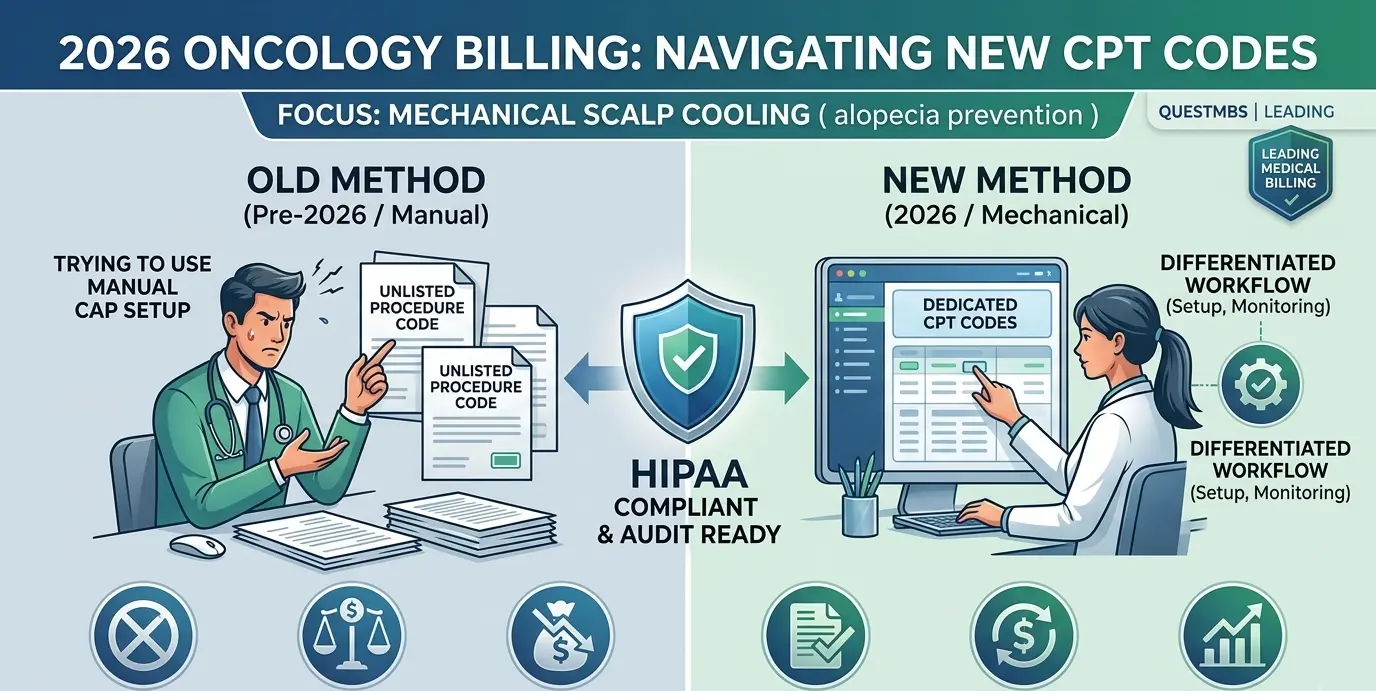
The way oncology billing works is changing in 2026. There are codes for things like mechanical scalp cooling. This is a deal for doctors and hospitals that treat cancer patients. They need to understand these changes so they can get paid correctly and follow the rules.
Understanding Mechanical Scalp Cooling
Mechanical scalp cooling is a way to help people who are getting chemotherapy. It uses a machine to cool the scalp. This helps prevent hair loss. More and more people are using this treatment. So the people who make the rules for billing decided to create special codes for it.
In the past doctors and hospitals used codes that were not specific to scalp cooling. Now there are new codes that are just for this treatment. This will make it easier for doctors and hospitals to get paid.
What’s New in CPT Coding for 2026?
The new codes for mechanical scalp cooling are different from the codes. They are more specific. They tell us what the doctor or hospital did. This includes:
- Setting up the machine
- Monitoring the patient
- Taking care of the patient after the treatment
These new codes will make it easier for insurance companies to understand what they are paying for. In the past insurance companies would sometimes not pay for mechanical scalp cooling because the codes were not clear.
Key Billing Considerations
1. Proper Code Selection
Doctors and hospitals need to choose the code for the type of mechanical scalp cooling they use. They also need to choose the code for the type of treatment they provide. This is important so they can get paid correctly.
2. Documentation Requirements
Doctors and hospitals need to keep records. They need to write down:
- What type of scalp cooling they used
- How long the treatment lasted
- If the patient was eligible for the treatment
- What they did to monitor the patient
If they do not keep records the insurance company might not pay for the treatment..
3. Payer Policy Variations
Insurance companies have policies. Some insurance companies will pay for scalp cooling. Others will not. Doctors and hospitals need to understand what each insurance company will pay for. They need to get permission from the insurance company before they provide the treatment.
4. Bundling and Unbundling Risks
Doctors and hospitals need to be careful when they bill for scalp cooling. They need to make sure they are not billing for things that are already included in the cost of the chemotherapy. This can be confusing. It is important so they can get paid correctly.
Revenue Cycle Impact
The introduction of these codes presents both opportunities and challenges for oncology practices.
Opportunities:
- Improved reimbursement accuracy
- Reduced reliance on manual claim reviews
- Better tracking of supportive oncology services
Challenges:
- Staff training on new coding guidelines
- Updating billing software and workflows
- Managing payer inconsistencies
Practices that proactively adapt will benefit from smoother claims processing and fewer denials.
Compliance and Audit Preparedness
As with any new billing codes, compliance is a top priority. Regulatory bodies and payers are likely to scrutinize claims related to scalp cooling during the initial rollout phase.
To stay compliant:
- Conduct internal audits regularly
- Train coding and billing teams on 2026 updates
- Maintain detailed patient records
Additionally, practices should monitor updates from the American Medical Association (AMA) and payer bulletins for any clarifications or revisions to the new codes.
Technology Integration
Modern oncology practices are increasingly leveraging AI-driven billing systems and electronic health records (EHRs) to manage coding updates. Integrating the new CPT codes into these systems ensures:
- Automated code selection prompts
- Reduced human error
- Faster claim submissions
Technology can play a vital role in optimizing revenue cycle management, especially when dealing with newly introduced services.
Patient-Centered Care and Financial Transparency
Mechanical scalp cooling is not just a billing update it reflects a shift toward patient-centered oncology care. As patients prioritize quality of life during treatment, offering services like scalp cooling can enhance satisfaction and outcomes.
However, transparency is key. Practices should communicate:
- Expected costs
- Insurance coverage limitations
- Available financial assistance programs
Clear communication builds trust and reduces billing disputes.
Preparing Your Practice for 2026
To successfully navigate oncology billing changes in 2026, practices should take a proactive approach:
- Train Staff: Ensure coders, billers, and clinicians understand the new CPT codes.
- Update Systems: Modify EHR and billing software to include the latest codes.
- Verify Coverage: Regularly check payer policies for scalp cooling reimbursement.
- Enhance Documentation: Standardize templates to capture required details.
- Monitor Performance: Track denial rates and reimbursement trends for continuous improvement.
Conclusion
The introduction of new CPT codes for mechanical scalp cooling marks a significant advancement in oncology billing for 2026. While these changes aim to improve clarity and reimbursement, they also require careful implementation and ongoing attention.
For oncologists, embracing these updates is not just about compliance it’s about aligning financial processes with evolving patient care standards. By staying informed, investing in training, and leveraging technology, oncology practices can successfully navigate this transition and ensure both clinical and financial success in the year ahead.